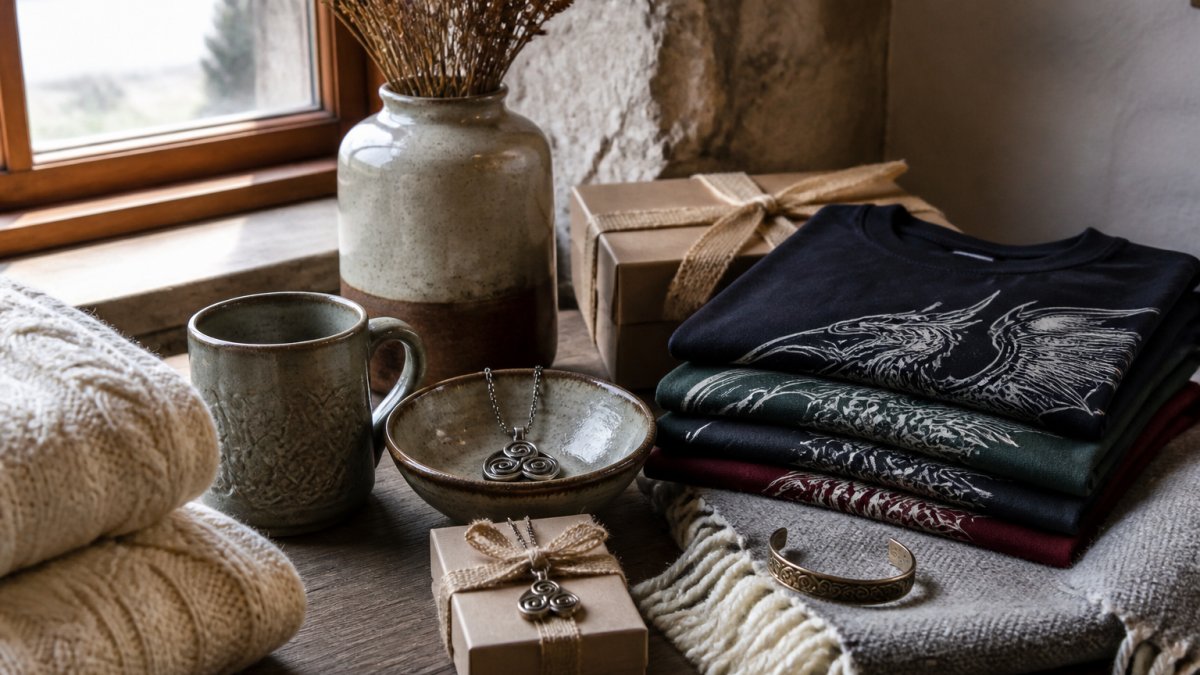
 ultimate-guide
7 Reasons Premium Welsh Gifts Cost More Than You Think
Last Updated: October 31, 2026
Quick Summary
Premium Welsh gifts cost more because small-batch production cannot reach big-retailer economies of scale, so each piece carries a heavier share of tooling, design time and wasted trials. The price also covers fair pay for skilled makers, real materials, and hidden costs like compliance, packaging and tracked delivery.
- A maker producing twenty pieces spreads setup cost across twenty, not ten thousand.
- A fair price should let the maker earn a proper hourly wage, not a token amount.
- Small makers carry the same fixed compliance and insurance burden as far larger firms.
- Compare delivered prices, not shelf prices, since tracked delivery and packaging add real cost.
- Divide delivered price by expected years of use to judge value for money.
Table of Contents
- The Real Cost Behind Premium Welsh Gifts
- What Makes Authentic Welsh Gifts Worth the Higher Price
- Handmade Welsh Crafts: Where the Money Actually Goes
- The Hidden Costs of Supporting Local Welsh Businesses
- How to Judge Craftsmanship, Authenticity and Value for Money
- Choosing a Piece from Môn Sublime Ink
- Frequently Asked Questions
The Real Cost Behind Premium Welsh Gifts
Premium Welsh gifts cost more because the price reflects small-batch production, fair pay for skilled makers, and materials mass retail cannot buy at volume. Buyers often ask what the extra money pays for: things a large retailer removes to hit a shelf price.
Premium Welsh gifts are handmade or small-batch pieces made by named makers, priced to cover real materials, real hours and real wages rather than to fit a discount shelf.
Small-batch production and the economies it cannot reach
A factory making ten thousand of one item spreads setup cost across all ten thousand; a maker producing twenty spreads it across twenty. Small-batch production cannot reach big-retailer economies of scale, so each unit carries a heavier share of tooling, design time and wasted trials. The price is higher because volume is lower, not because the maker is charging a luxury premium.
Fair pay for the makers who do the work
The biggest hidden line in a handmade price is labour paid at a real rate. A fair price should allow the person doing the work to earn a proper hourly wage, not a token amount topped up by passion. When a gift is cheap, something in the chain was compressed, rarely the retailer's margin. Ask what hourly rate the maker needs to survive, then check whether the price plausibly covers it.
What Makes Authentic Welsh Gifts Worth the Higher Price
Authentic Welsh gifts earn their price through provenance, skill and durability rather than through a flag on the packaging. A piece that is genuinely made in Wales, by a maker you can name, using designs rooted in Welsh culture, carries a story and a lifespan that a mass-produced souvenir cannot match.
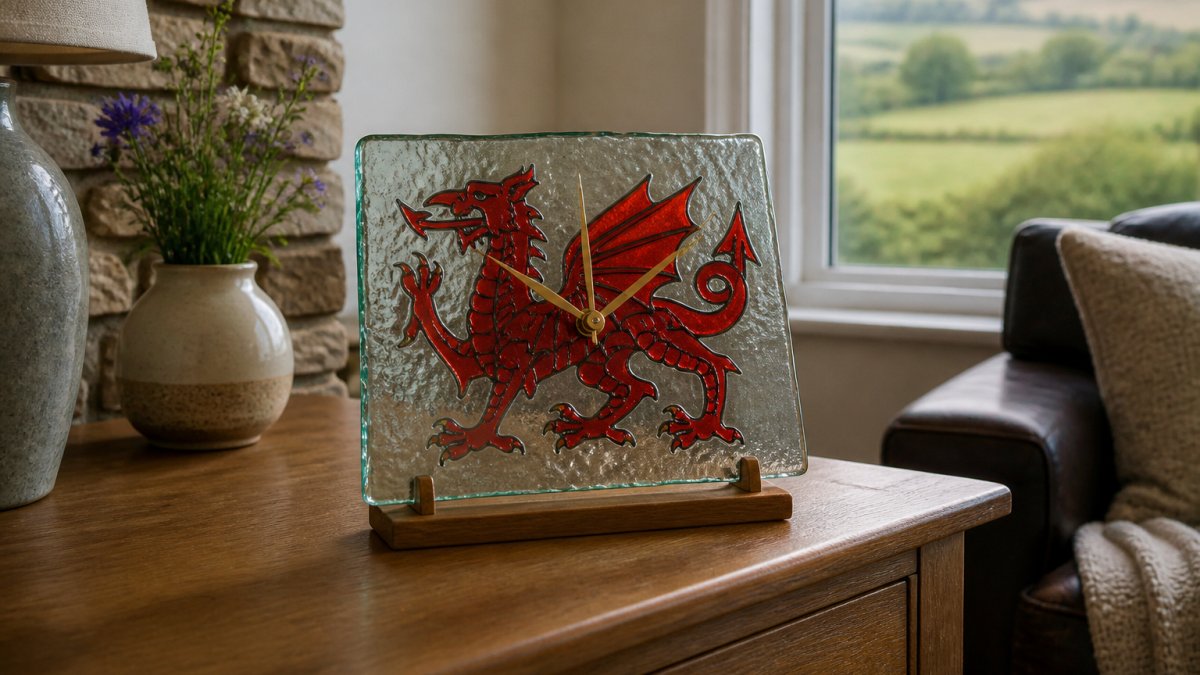
Authenticity shows up in small details. A Welsh-dragon glass clock demonstrates authentic Welsh iconography and quality finish at the premium end. The Welsh Government's guidance on country of origin and product labelling is a useful starting point for understanding what "made in Wales" claims should mean, and why provenance is worth checking rather than assuming.
Handmade Welsh Crafts: Where the Money Actually Goes
Handmade Welsh crafts carry four costs buyers rarely see itemised: materials, tools, time and trial-and-error that never reaches the shelf. Wool or timber is bought in small quantities at a higher unit cost. Tools, from carving knives to looms, are a fixed investment spread across few pieces. The hours are real and skilled, and failed prototypes are absorbed into the price of the ones that worked. A limited-edition, numbered small-batch piece shows concretely where materials, time and craft labour go: see Mythôn: The Awakening.
Materials, tools and time in a single blanket or love spoon
Take a traditional wooden love spoon: sound, dry timber, hours of practised handwork, and a design laid out before a single cut. A woven Welsh blanket is the same story in textile: yarn, loom time, finishing and inspection. Neither can be rushed without quality collapsing, which is why a handmade piece costs more than a factory equivalent.
The Hidden Costs of Supporting Local Welsh Businesses
Supporting local Welsh businesses means funding costs that never appear on a product page: compliance, packaging, delivery and the admin of running small. Gift packaging, protective wrapping and tracked delivery add a real amount per order.
Itemising those costs is the angle most gift guides skip, because once separated out, the premium stops looking arbitrary. A typical small-batch order carries four cost blocks a mass retailer hides inside a shelf price:
- Compliance and admin. Product safety labelling, insurance and business rates are fixed annual costs. A maker selling 300 pieces a year carries the same registration and insurance burden as a firm selling 30,000, so each order absorbs a disproportionate share.
To read a delivered price, subtract the visible product cost and ask what remains. If the remainder plausibly covers packaging, tracked postage, payment fees and a share of fixed compliance costs, the price is honest.
The premium is not a single markup but the sum of many small, real costs that volume normally absorbs. A maker who explains those costs openly gives you what you need to decide whether the premium is fair, and one who cannot is worth questioning.
How to Judge Craftsmanship, Authenticity and Value for Money
Judge craftsmanship by details a maker cannot fake: clean joins, even finish, a design that holds up close, and a maker willing to explain their process.
Cost per year of use. Divide the delivered price by the years you realistically expect the piece to last.
Authenticity checks you can verify. Provenance claims should be specific enough to check.
Use this checklist before you buy:
- Can the maker name where and how the piece is made?
- Does the design reference real Welsh culture or mythology, not generic Celtic clip art?
- Are materials and finish described specifically, not vaguely?
- Is the maker's wage and production method explained anywhere?
- Does the price include packaging and delivery, or is it added later?
- Are there real customer reviews you can read?
- Is any Welsh-language text accurate and correctly spelled?
A design rooted in Welsh mythology lets you test authenticity and craftsmanship against a real example rather than an abstract claim.
| What you are judging | Weak signal | Strong signal |
|---|---|---|
| Provenance | "Designed in Wales" with no maker named | Named maker and place of production |
| Materials | Vague "premium materials" | Specific timber, yarn or glass stated |
| Craft | Printed lookalike of a handmade style | Visible handwork and clean finish |
| Language | Misspelled or machine-translated Welsh | Accurate, correctly spelled Welsh text |
| Value | Lowest sticker price | Lowest cost per year of use |
| Support | No reviews or contact route | Readable reviews and a clear returns policy |
Choosing a Piece from Môn Sublime Ink
Choosing well comes down to matching the piece to the person and occasion, then checking the details that justify the price. At Môn Sublime Ink, every design is created directly on Ynys Môn, and pieces are made to order, exactly why they sit at a premium rather than a shelf price. You can see a made-to-order, gift-boxed piece made on Ynys Môn on the Mythôn Clock page.
Frequently Asked Questions
What makes a gift authentically Welsh?
Authenticity comes down to provenance and process. A gift is genuinely Welsh when it is designed and made here, or when the maker can show where the design, materials and labour came from. Look for named makers, a stated workshop location, and details of the method used. Symbols like the red dragon, daffodil or love spoon add cultural meaning, but the paper trail behind the product is what proves it is more than a generic souvenir with a dragon printed on it.
Are handmade Welsh crafts always more expensive than mass-produced items?
Usually, yes, because the cost base is different. A factory can spread tooling, design and staff costs across thousands of units; a small workshop making twenty pieces a month cannot. Handmade Welsh crafts also carry the maker's hourly rate, which has to cover rent, materials and a living wage. That said, price gaps narrow on simpler items. Compare like for like: a hand-thrown mug against a printed one, or a woven blanket against a synthetic throw, and the difference reflects labour and material quality rather than markup.
How does supporting local Welsh businesses affect what I pay?
Small businesses buy materials in smaller quantities, so they pay more per unit than large retailers. Supporting local Welsh businesses means your money covers those real costs plus a fair margin for the owner, rather than funding a centralised warehouse. In practice you are paying for accountability, a named point of contact and a product that reflects its region.
What should I check before buying premium Welsh gifts online?
Check four things. First, whether the listing states where the item is made and by whom. Second, whether the materials are specified, for example 100% wool rather than a wool blend. Third, whether there are clear photographs of the actual product and its finish. Fourth, the returns policy, including who pays postage. Reviews help too, but read the ones that mention quality and sizing rather than delivery speed. If a shop cannot answer these questions, the premium price is harder to justify.
The challenge is simple: most gift buyers never see where their money goes, so premium prices feel arbitrary. We built Môn Sublime Ink to remove that doubt, with original designs created on Ynys Môn, folklore-themed apparel and home gifts, and made-to-order production that keeps quality high and waste low. Get started with Môn Sublime Ink and give a gift whose price you can actually trace.
